Committed to building sustainable modular units
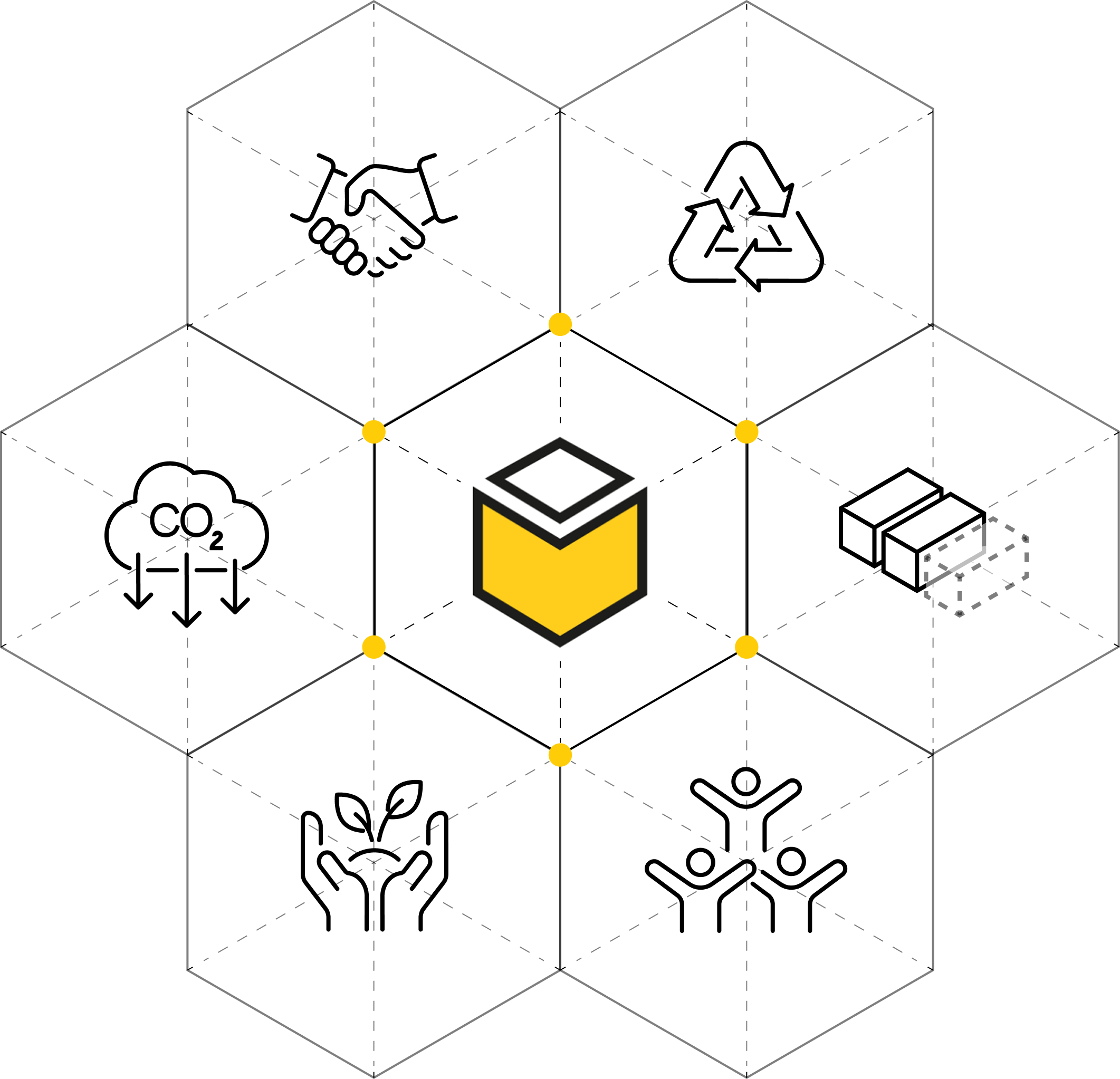
We take responsibility for our societal impact – whether positive, negative or neutral – and have implemented a six-axis strategy to manage it. Our commitments cover the three pillars of sustainable development: governance, social responsibility and the environment, and are formalised in our CSR charter.

A long-term approach to construction
Our corporate strategy is detailed in the downloadable document below and aims to reduce resource consumption and waste production by extending the lifespan and usage duration of our construction product.
The effects of this strategy are regularly assessed and published annually in our ESG-CSR activity report.
A strategy designed to reduce impact
Our corporate strategy is detailed in the downloadable document below and aims to reduce resource consumption and waste production by extending the lifespan and usage duration of our construction product.
The effects of this strategy are regularly assessed and published annually in our ESG-CSR activity report.
Acting responsibly
Six pillars structuring our commitments

Eco-design
Starting from the observation that every improvement action is necessary and useful, yet by definition mostly corrective and often highly energy-consuming, the idea of acting as early as possible naturally arises. And “as early as possible” in product creation means starting from the design stage.
Through eco-design initiatives, we aim to reduce resource consumption and waste production by extending product lifespan and use, and by implementing strategies such as selective deconstruction, reversible assemblies and preparation for reuse.
The establishment of an in-house engineering office mastering digitisation tools such as BIM modelling, together with compliance and anticipation of regulatory constraints, as well as monitoring of bio-based, certified and sustainable materials, enables us to achieve these objectives.
Industrialisation and standardisation
Eco-design is the essential prerequisite for standardisation, and standardisation in turn for industrialisation. By combining these two strategic pillars, we aim to maximise many advantages such as jobs that are less easily relocated, optimised resource management, reduced and better-managed waste production, short lead times, consistent repeatable quality and predictive maintenance.

Social impact
Off-site modular construction reduces the impact of urban worksites, especially in terms of mobility (transport traffic) and noise pollution. It also reduces hardship caused by weather conditions thanks to sheltered factory work, and makes the sector more accessible to people with lower qualification levels.

Environmental impact
Off-site modular construction limits land use impact and allows reversible land use, with a direct positive effect on biodiversity conservation.
We guarantee compliance with the DNSH principle (Do No Significant Harm) in our activities. This means avoiding significant direct or indirect harm, throughout the full lifecycle, to the following six environmental objectives: climate change mitigation, climate adaptation, the sustainable use and protection of water and marine resources, the circular economy, pollution prevention and reduction, and biodiversity and ecosystem protection and restoration.
Decarbonisation and CO2
CO2-equivalent emission calculation tools are essentially comparative tools and therefore require recurring data collection and reporting. These measurement tools are valuable aids in prioritising and guiding eco-design actions. LCAs and carbon assessments may concern our product, our off-site modular construction principle, or our organisation and industrial ecosystem. The results also serve as communication tools for all stakeholders.

Local and collaborative
We are committed to prioritising local suppliers and subcontractors. Currently, our 30 main suppliers already meet our proximity criteria. We also foster a collaborative ecosystem and encourage stakeholders to adhere to our CSR charter, regardless of their current level of CSR engagement.
Aligning sustainably with the United Nations goals
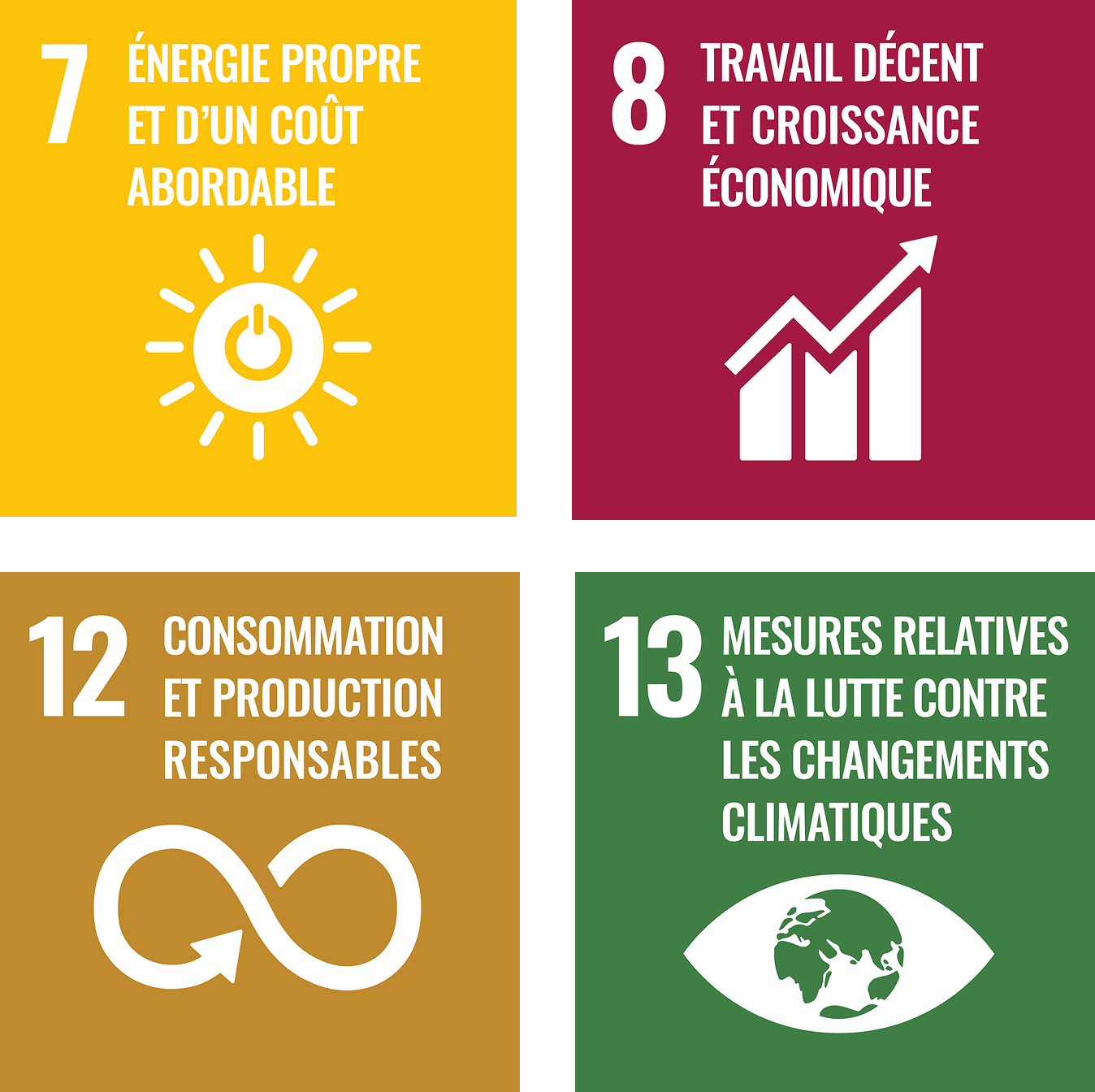
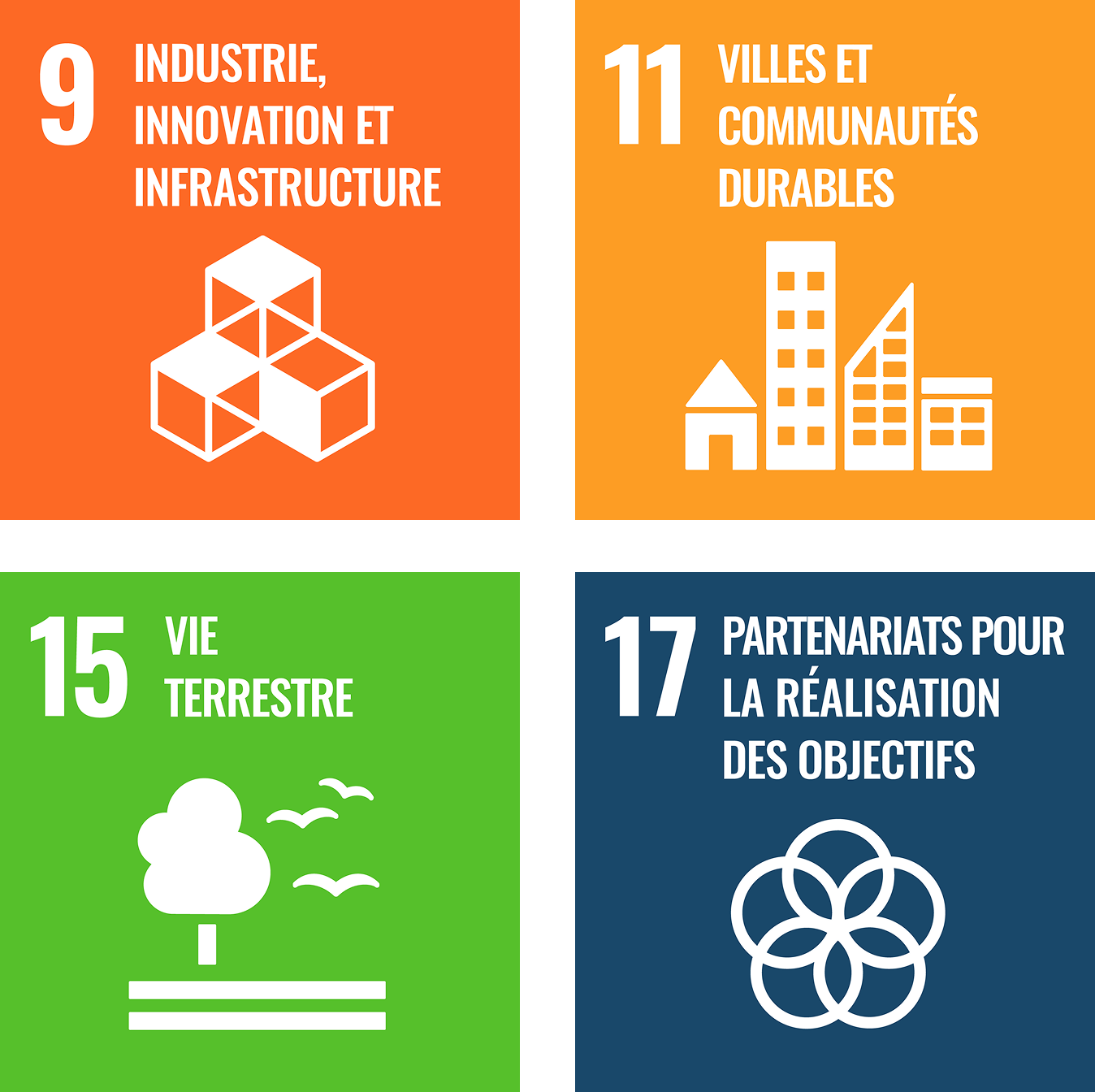
Here is our priority selection among the 17 goals defined by the United Nations, aligned with Degotte’s six strategic pillars.
Our certifications
Recognised and certified commitments
Wanting to commit is one thing; implementing a full strategy and having those efforts audited by an independent third party is another. For our CSR efforts, we have received the ESR – Responsible Company and Responsibility Europe certification.
A way of confirming our commitments in a clear, independent and transparent way.
Certified and accredited supplier
Official recognition of our ability to meet sector requirements.
Class 6, category D accreditation
Certification enabling us to carry out complex modular construction projects.
ISO quality standards
A structured organisation based on processes that ensure quality and traceability.
Compliance with construction regulations
Projects designed to comply with current regulations, ensuring safety and reliability.
Eco-design, decarbonisation, environmental impact… For many years, we have paid close attention to the footprint left by our buildings. Today, with our certification, that attention becomes a formal commitment.VincentCEO - Degotte


Dailly efforts
A long-term commitment
Our efforts are ongoing, our CSR strategy unfolds over time, and our long-lasting partnerships are built gradually through each encounter. This CSR story began some time ago, and we intend to keep writing it for many years to come.
Concrete practices
Making our commitments visible and accessible
Our commitments and strategies are public… and so are our results. Below, in full transparency, you will find all documents relating to our CSR policy.
The impact of this strategy is regularly assessed and published annually in our ESG-CSR report
Integrating sustainability from the design stage
Projects are conceived from the outset to include environmental criteria and limit their impact.
Optimising production processes
Factory production allows better management of resources and optimised workflows.
Responsible selection of materials and partners
Materials and partners are selected in line with our commitments.
Safety and working conditions
Structured working environments that guarantee team safety.
Monitoring and continuous improvement
An evolving approach aimed at continuously improving practices and performance.
A commitment shared collectively
In this CSR approach, we are not alone. Many partners share these values and, through their own commitments, enable us to uphold ours. We are proud to associate them with our CSR initiative and thereby further strengthen the impact of our results.
Join us!
These CSR commitments are, of course, our own, but we would like to share them with you and with each of our stakeholders. That is why we invite you to join us in this initiative and sign our CSR Charter.